
That “1-Year” Food Kit in Your Basement May Last 7 Weeks. Check the Label Tonight
By Marc Coleman · July 10, 2026
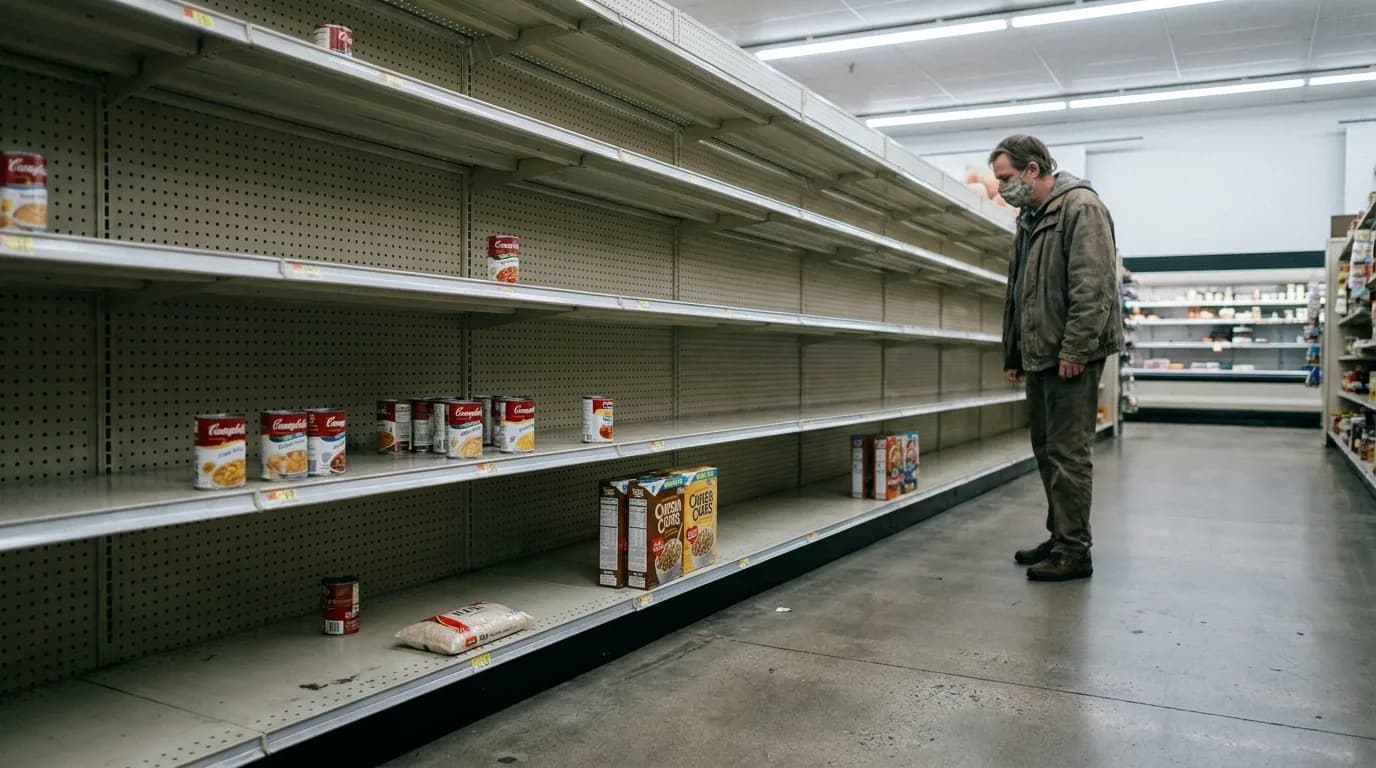
There's a bucket sitting in thousands of American basements right now with the words “1-Year Emergency Food Supply” printed on the side. The family that bought it sleeps better because of it. And for most of those families, the label is quietly wrong — not by a little, but by roughly ten months.
The trick isn't hidden very well. It's on the label, in the fine print, in a number almost nobody reads: calories per day.
The 1,200-calorie assumption
The overwhelming majority of “1-year” kits are rated for one adult eating roughly 1,200 to 1,500 calories a day. For context, 1,200 calories is a medically supervised weight-loss diet. It is not a working ration — it's the intake of someone trying to shrink.
In a real emergency, people don't sit still. They haul water, cut wood, walk instead of drive, and work with their hands. Their needs go up, not down. A realistic family of five burns 9,000 to 12,000 calories a day between them.
Now run the math on the kit. A “1-year” supply rated at 1,200 calories/day contains about 438,000 total calories. Divide that by a family of five's real daily burn and you get six to eight weeks. The label said a year. The mouths at your table say seven weeks.
The two-minute label check
- Find the kit's total calories (sometimes listed per serving × servings — multiply it out).
- Add up your family's real daily need: roughly 2,000 per adult, 1,600 per child — more if they're active.
- Divide total calories by that daily number. The result is the only honest rating your kit has: days.
Why nobody catches this
Kits are sold by weight, servings, and shelf life — all real numbers that measure the wrong thing. The only unit that keeps a family alive is days, and no label prints it for your household, because it depends on who's at your table.
What to do with your number
If your kit math came out shorter than you expected, you found out at the best possible moment — while stores are open and prices are normal. The gap between seven weeks and a full year closes surprisingly cheaply if you buy calorie-dense staples first: white rice, dry beans, oats, and cooking oil routinely cost under $2 per day of food for an adult.
The families who struggle are the ones who discover the gap on the day the shelves empty. The two minutes you spend with a calculator tonight is the cheapest preparedness move you'll ever make.