
We Ran the Numbers on a “Fully Stocked” Pantry. It Held 23 Days of Food
By Marc Coleman · August 14, 2026
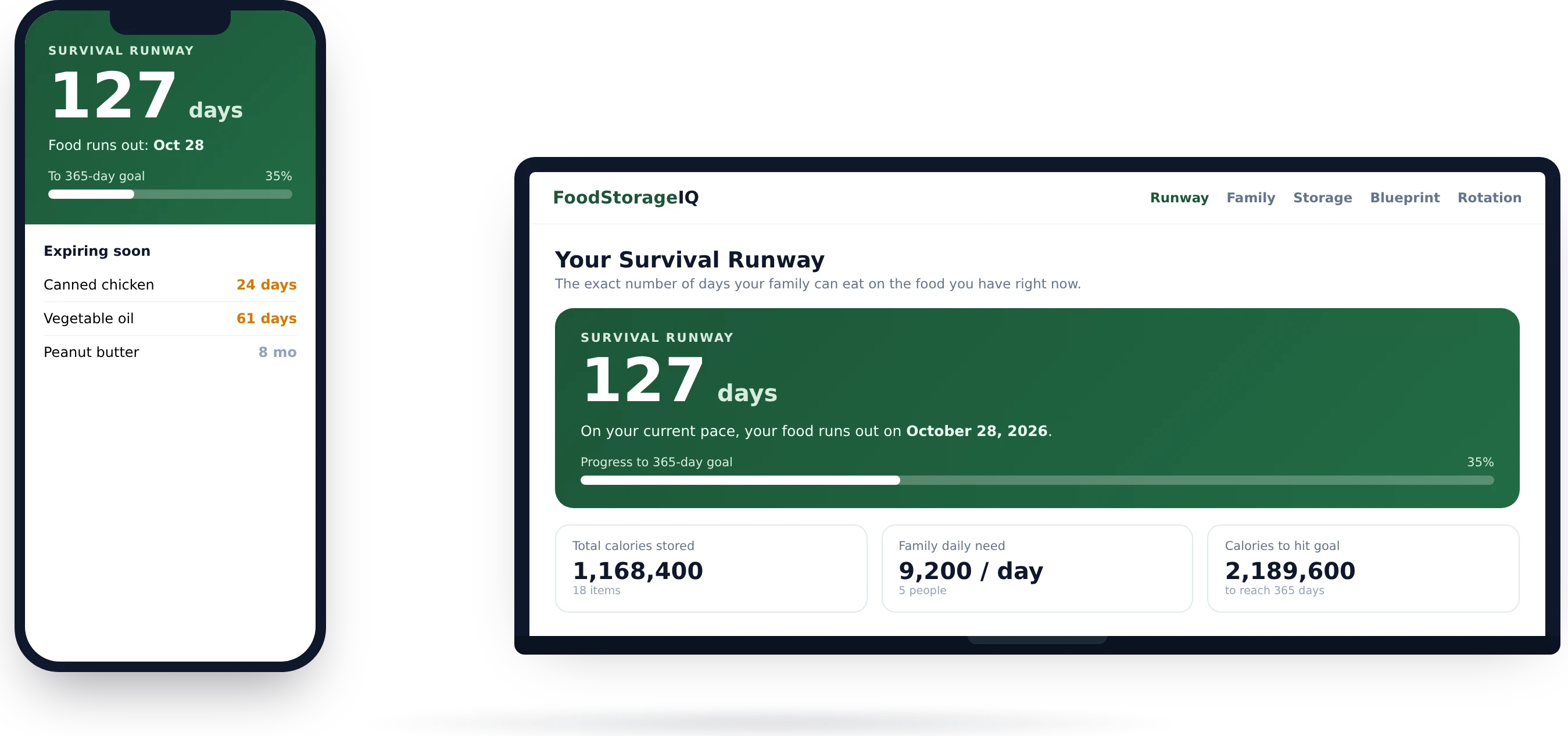
The pantry in question was genuinely impressive: floor-to-ceiling shelves, neat rows of cans, pasta, cereal, sauces, snacks. Anyone would call it fully stocked. Then we did the one thing nobody does — added up the calories and divided by the family's daily need. The answer: 23 days.
Why full shelves lie
Modern pantries are optimized for variety, not density. Cereal boxes are mostly air. Jarred sauces are mostly water. Snack food is expensive calories in bulky packaging. A shelf can be visually full while holding remarkably little of the thing that actually feeds people.
Meanwhile the boring foods that hold real calories — rice, beans, oats, oil, peanut butter — take up almost no space. Twenty pounds of rice is a single quiet bucket holding 33,000 calories: more food energy than an entire wall of cereal and crackers.
The eyeball error
Your eyes measure volume. Your family runs on calories. Those two numbers can differ by a factor of five on the same shelf — which is why 'it looks like a lot' is the most dangerous sentence in preparedness.
The fix costs less than the illusion
The family in question didn't need to double their pantry. They added four buckets of staples — total cost of a modest grocery run — and their number tripled. The shelves look almost the same. The math looks completely different. That's the whole game: measure in days, buy density first, and let the pretty variety be the garnish instead of the plan.